Why Fiber Can Make You Bloated: How to Build a Gut That Can Handle More Foods
🎧 Listen to this episode on iTunes | Spotify | YouTube
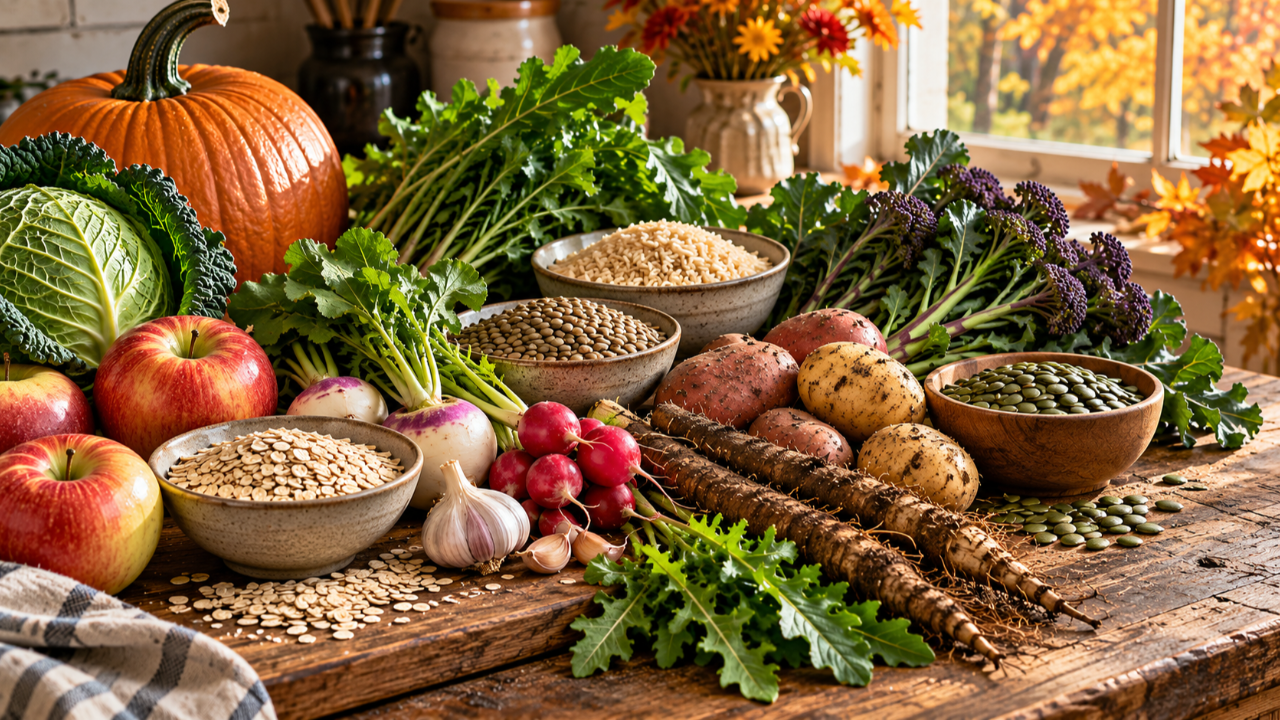
I love the foods of fall. Apples, oats, potatoes, roots, greens, beans, lentils, seeds, soups and stews — all of the foods that naturally bring more variety and substance to the plate.
And for some people, eating this way feels terrible.
That is the part I think gets flattened when we talk about fiber.
We hear a lot about eating more plants, feeding the microbiome, increasing fiber and getting more diversity into the diet. Broadly speaking, those are good goals.
But knowing fiber is good for you and actually having a digestive system that can comfortably work with more of it are two very different things.
There are people who cut almost all fiber out and feel immediate relief. There are people who tolerate beans beautifully but react badly to a dozen other plant foods. And there are people who live with so much gas, pressure, bloating or distention that eating enough plants — or sometimes enough food in general — becomes genu...
Why Healthy Eating Still Makes You Feel Bad: A Look at Your Gut Terrain

The Terrain Map Series
I created the Terrain Map Series to help you understand your health through an ecosystem lens.
Rather than looking at symptoms, minerals, microbes, digestion, metabolism and other body systems as isolated problems to fix, this series begins to map the relationships between them — and the terrain they’re all happening within.
Think of it as a kind of Rosetta Stone for the terrain approach: a way to learn the language and orientation behind the work I do, and why a foundations-first approach can look very different from simply chasing symptoms or adding more interventions.
The first three pieces below help set the stage for this way of thinking. The six-part Terrain Map that follows takes a deeper look at the modern gut ecosystem — including microbial diversity, keystone species, endotoxins, motility and the gut barrier — and how these layers interact with chronic patterns of inflammation, reactivity and resilience.
This is a living body of work that I’ll c...
How Our Bodies Adapt to Early Fall: Light, minerals & the physiology of seasonal change
A Rewilded Wellness approach to seasonal health
What happens during a seasonal transition, and how our relationship with our foundations can change as we become more capable of responding to our bodies.
🎧 Listen to this episode on iTunes | Spotify | YouTube
We crossed the fall equinox on September 22, the start of Libra season and the real turn into autumn. The equinox is the moment light and dark come into balance, and they don't stay there. The days keep getting shorter from that point on, which is a good picture of what balance looks like in a living system. It moves.
We're at the very beginning of fall. When most of us think about fall, we jump ahead to Halloween, Thanksgiving, the clocks changing, and cold and flu season. Those belong to later phases. Right now the season is still establishing itself, and many of us are adjusting to it without having named what we're adjusting to.
I noticed it this year because the weather turned on me fast. The temperature dropped hard righ...
What Comes First When Everything Matters? Discernment, Capacity + a Rewilded Approach to Health

🎧 Listen to this episode on iTunes | Spotify | YouTube
We are living in a time when access to health information is unlike anything humans have ever had before.
You can research every symptom you've ever experienced. You can run increasingly sophisticated tests. You can listen to thousands of podcast episodes, read about almost anything, and now with AI, you can take a piece of information about yourself and go down an incredibly deep rabbit hole in about thirty seconds.
Which is kind of amazing.
But there's another side to that.
Before long, you're learning about blood sugar and protein and thyroid and iron and gut health and histamine and hormones and cortisol and nervous system work and minerals and morning light and mitochondria and fascia — and the problem isn't that those things are nonsense. A lot of them may be completely relevant. That's exactly what makes this so difficult.
They can all be true. But they cannot all be first.
And when everything seems to matter, most ...
What Does Your Body Need Now? Minerals, Patterns + Ecology

What Does Your Body Need Now? Minerals, Patterns + Ecology
🎧 Listen to this episode on iTunes | Spotify | YouTube
I just got my 48th hair tissue mineral analysis back.
Twelve years of running this test on myself — every quarter, through every season, every transition, every difficult chapter and every rebuilding season.
And what I've learned in that time has very little to do with which minerals were low and which were high.
What it's taught me is how to read patterns. And more than that — how to ask a better question.
Not: which minerals do I need to fix?
But: what does this version of me need now?
That shift sounds subtle. But it changes everything about how I approach this work. And I think it might change something for you too.
Why minerals feel so complicated
Minerals are having a moment in the wellness world, and in many ways I love that. They are foundational. They matter enormously.
But I'm also watching them get pulled into the same fragmented model so many of u...
Why Am I So Stiff? The Perimenopause Symptom Nobody Can Explain

🎧 Listen to this episode on iTunes | Spotify | YouTube
I'm about four months away from officially reaching menopause. I haven't had a cycle since December. And while everyone seems to be talking about hot flashes and night sweats, that hasn't really been my experience.
What I've been noticing instead is the condition of my tissues.
My body feels tighter. More guarded. Less resilient than it used to. Not necessarily painful — just different. Like my body has shifted into a different tissue state altogether.
Once I started researching it, I realized this is something an awful lot of women are experiencing during the menopausal transition. And almost nobody is explaining it in a way that actually makes sense.
So that's what this episode is about.
It's not just hormones
Yes, estradiol is changing. And that matters — because estradiol isn't just involved in reproduction. It also helps regulate collagen turnover, tissue hydration, blood flow, connective tissue remodeling, inflammato...
Survival Body Chemistry: Creating the Conditions for Real Healing
🎧 Listen to this episode on iTunes | Spotify | YouTube
This time of year, the body receives more environmental information than at almost any other point in the annual cycle — more light, longer days, stronger circadian signaling. And I think that matters more than most of us realize, especially if you're in the middle of trying to rebuild from chronic health issues.
But the solstice is really just the doorway into something I've been circling for years and finally have language for: survival body chemistry.
It's not a diagnosis. It's not something wrong with you. It's what happens when a body has spent so long adapting to difficult conditions — mold exposure, unresolved trauma, grief, financial stress, broken sleep, chronic undernourishment, a decade of overgiving — that survival becomes the priority instead of repair.
Here's what I mean. The body doesn't have a simple on-off switch between "surviving" and "thriving." It's far more nuanced than that. What I actually see, especia...
What a Concussion Is Still Doing to Your Body (Years Later)

Listen to this episode anywhere you tune in — Apple Podcasts, Spotify, and YouTube.
Have you ever hit your head, shaken it off, and just... kept going?
Maybe it happened in a car accident. Maybe it was a fall, a sports hit, a blow you took and didn't think was serious enough to mention. Maybe it happened during a chaotic season of life and you genuinely forgot about it — until something in your body stopped making sense and you couldn't figure out why.
This episode is for you.
The Conversation Nobody Is Having
We talk a lot about concussions in the context of sports and helmets and sideline protocols. What we don't talk about nearly enough is what happens after — months later, years later — when the hit is long forgotten but the body is still quietly reorganizing around it.
I've been sitting with this topic for a while, and Aries season — the season of the ram, the head, the one who leads with their skull — felt like exactly the right time to bring it forward.
In this episode ...
Why Your Body Reacts to Everything: The Gut Barrier Explanation No One Gave You

Listen to this episode of the Rewilded Wellness podcast anywhere you tune in:
iTunes: HERE
Spotify: HERE
YouTube: HERE
If you've ever felt like every system in your body has a problem — digestion off, skin reactive, mood unpredictable, exhausted but wired, and nothing you try seems to hold — you're probably not dealing with ten different problems.
You're dealing with one. A boundary problem. And that boundary is your gut barrier.
This episode continues my Terrain Map series, a Rosetta Stone style body of work mapping what's actually happening ecologically inside modern bodies. If you're new here, start from the beginning — each episode builds on the last. This one goes deeper into the living ecosystem that determines what your immune system reacts to, what your nervous system has to manage, and why when that boundary breaks down, the body stops feeling like a safe place to live in.
What the gut barrier actually is
Most people think of the gut barrier as a lining. Something passiv...
Why Your Body Feels Stagnant: Lymph, Fascia & Fluid Flow
Early March has a particular feeling to it.
The snow softens one day, the air smells different, and something in you lifts. Then the next day it’s gray again. Cold again. Waiting.
A lot of bodies feel like that right now too.
Stiff in the morning.
Puffy around the face or belly.
Digestion slow or pressurized.
Waking congested but not sick.
Brain fog that lingers.
A heaviness that doesn’t match what you’ve been eating or doing.
This is the time of year people reach for a cleanse.
But most of the time, what you’re experiencing isn’t toxicity.
It’s fluid physiology.
When Fluid Stops Moving Well
Your body is approximately 60% water — and that water is not static. It moves continuously through structured systems:
-
The lymphatic system
-
Interstitial fluid (the fluid surrounding your cells)
-
Cerebrospinal fluid (brain clearance)
-
The mucosal lining of your gut and respiratory tract
-
Your fascia, the connective tissue network that holds hydration and tension
When th...
