The Hidden Cause of Chronic Bloating, Brain Fog, and Nutrient Deficiencies

A terrain-first explanation for why motility is about far more than constipation
This blog is part of a series mapping the terrain of modern chronic health patterns. If you haven't read the previous installments, start with Why Modern Bodies Feel Inflamed, Reactive, and Stuck, then work forward through the series. Each one builds on the last.
I've mapped the gut ecology triangle: low microbial diversity, endotoxin load, and mucosal barrier strain. We've seen how losing keystone species shifts fermentation toward inflammatory metabolites. We've seen how those metabolites cross a compromised barrier and drive systemic immune activation that shows up as reactivity, tight fascia, histamine intolerance, and a nervous system that can never stand down.
Now we add the piece that most people never connect to any of this.
Motility.
Not constipation. Not just "how often you poop." But the entire moving, rhythmic, coordinated system that determines how long everything stays in your gut, how...
Why Your Body Reacts to Everything: The Gut Barrier Explanation No One Gave You

Listen to this episode of the Rewilded Wellness podcast anywhere you tune in:
iTunes: HERE
Spotify: HERE
YouTube: HERE
If you've ever felt like every system in your body has a problem — digestion off, skin reactive, mood unpredictable, exhausted but wired, and nothing you try seems to hold — you're probably not dealing with ten different problems.
You're dealing with one. A boundary problem. And that boundary is your gut barrier.
This episode continues my Terrain Map series, a Rosetta Stone style body of work mapping what's actually happening ecologically inside modern bodies. If you're new here, start from the beginning — each episode builds on the last. This one goes deeper into the living ecosystem that determines what your immune system reacts to, what your nervous system has to manage, and why when that boundary breaks down, the body stops feeling like a safe place to live in.
What the gut barrier actually is
Most people think of the gut barrier as a lining. Something passiv...
Why Your Immune System Can Never Stand Down

I am watching an epidemic of immune systems that cannot rest.
Not dramatically. Not in a way that shows up clearly on standard labs or announces itself with an obvious diagnosis. Just a quiet, chronic state of alert that most people have slowly normalized — the reactivity that comes and goes, the threshold that keeps getting lower, the sense that your body is working harder than it should be for reasons you can't quite pin down.
This is the layer underneath the inflammation conversation that most people never reach. And it's where a lot of chronic patterns actually live.
That's what this blog is about.
This blog is part of my Terrain Map series — a Rosetta Stone style body of work mapping what's actually happening ecologically inside modern bodies. If you're new here, start with Why Modern Bodies Feel Inflamed, Reactive and Stuck, then The Modern Gut Has Lost Resilience, then Your Inner Ecosystem Lost Its Foundation Species. Each one builds on the last.
In the last blog I map...
When Your Gut Improves, Then Falls Apart Again What’s Actually Missing in Modern Gut Repair
Why your gut ecosystem needs more than numbers — and what it actually loses when keystone species disappear
You've tried probiotics.
They worked. For maybe two weeks, a month. Your digestion felt better. The bloating calmed down. You had more energy.
And then it stopped. The bloating came back. The reactivity returned. Whatever shift you felt didn't hold.
So you tried a different probiotic. A different protocol. You rotated strains. You added prebiotics. You eliminated foods. You did the things.
And the same pattern happened. Brief improvement. Then plateau. Then backslide.
It's not that nothing helps. It's that nothing holds.
And at some point, you start to wonder: is my gut just broken? Is this something I'm going to have to manage forever? Am I missing something fundamental?
Yes. You are.
But it's not what you think.
The problem isn't that you haven't found the right probiotic yet. The problem isn't that you need a more restrictive diet or a more aggressive protocol...
Why Modern Bodies Feel Inflamed, Reactive & Stuck

A terrain-first explanation for ecological compression
You feel tight all the time.
Not just physically tight, though that too. Your fascia won't soften. Your shoulders live somewhere near your ears. Your middle back has been locked up for so long you've stopped noticing it.
You're tired but wired. You don't sleep as deeply as you used to. You don't recover the way you used to.
Foods you used to tolerate fine now create bloating, brain fog, or a mood shift you can't quite explain. You've become sensitive to chemicals, to environments, to other people's stress. Sometimes it feels like you're allergic to life.
You're functioning. Maybe even high-performing. But something feels off in a way that's hard to name. Like you're operating with less margin than you should have.
And you've probably tried a lot. You eat clean. You take your supplements. You've done the elimination diets, the gut cleanses, the protocols. You've seen practitioners. You've read the books, listened to the p...
What It’s Like to Work With Me: A Long-Game Approach to Minerals, Microbes, and Healing

Most people come to my work, Minerals & Microbes, when they're at an impasse.
___________________________________________________________________
If you’d rather listen than read, this conversation is also available on the Rewilded Wellness Podcast (Season 2, Episode 31) — you can tune in on:
Apple Podcasts — HERE
Spotify — HERE
YouTube — HERE
___________________________________________________________________
They’ve exhausted many other approaches: diet changes, practitioners, lab tests, protocols. Maybe years of it. And while some things helped, the approach has been wildly incoherent. They’ve been reacting to symptoms as they arise and chasing causes, but nothing has actually rebuilt the body in a way that feels stable or sustainable.
If you’re here, you’ve probably already tried a lot.
I know this because I’ve watched people arrive having been run through the same few loops the functional health world keeps people cycling through.
Some show up with 15+ bottles of supplements, taken ...
When Science Becomes Authority and the Body Gets Lost

We’re living in a time where people have access to more health information than ever — and yet feel less clarity, confidence, and trust in their bodies than ever before.
That contradiction is not accidental.
In modern wellness culture, science has quietly shifted roles. What was meant to be a tool for exploration has started acting like authority — and when that happens, the body often gets lost in the process.
This episode continues a conversation I’ve been unfolding over the last few weeks. First, we talked about the shadow side of wellness culture: over-treatment, information overload, and the loss of containment. Then we looked at how oversimplified wellness narratives backfire in real bodies. Here, I’m pulling on the next thread underneath all of it: study obsession — and how it disconnects people from their own biology.
This isn’t an anti-science conversation.
It’s about misuse.
Studies were never designed to replace lived experience. They isolate variables on purpose. They r...
Read Your Terrain, Not Your Symptoms: Stop Fighting, Start Flowing

Your Evolution from Swimming Upstream to Flowing with Your Body's Wisdom
🎧 Listen to the Full Episode: You can hear the complete story and all the details on iTunes, Spotify, or YouTube
I've been soaking up this magical Leo season, picking berries at local farms and making plant infusions that feel like exactly what my body needs. It got me thinking about flow versus force - and how we've all been conditioned to swim upstream against our bodies instead of working with their natural wisdom.
In this episode, I'm sharing what my garden taught me about healing, why I've made some bold boundary decisions in my practice, and how to move beyond the endless root cause hunting that keeps so many people stuck in health rabbit holes.
I dive into a powerful case study of a 49-year-old client whose previous functional medicine approach had her on hormone precursors to "fix" imbalanced labs, while completely missing the terrain story her body was telling. When we looked at her hair mineral analys...
Composting vs. Cleansing: Why Parasite Obsession Keeps People Stuck
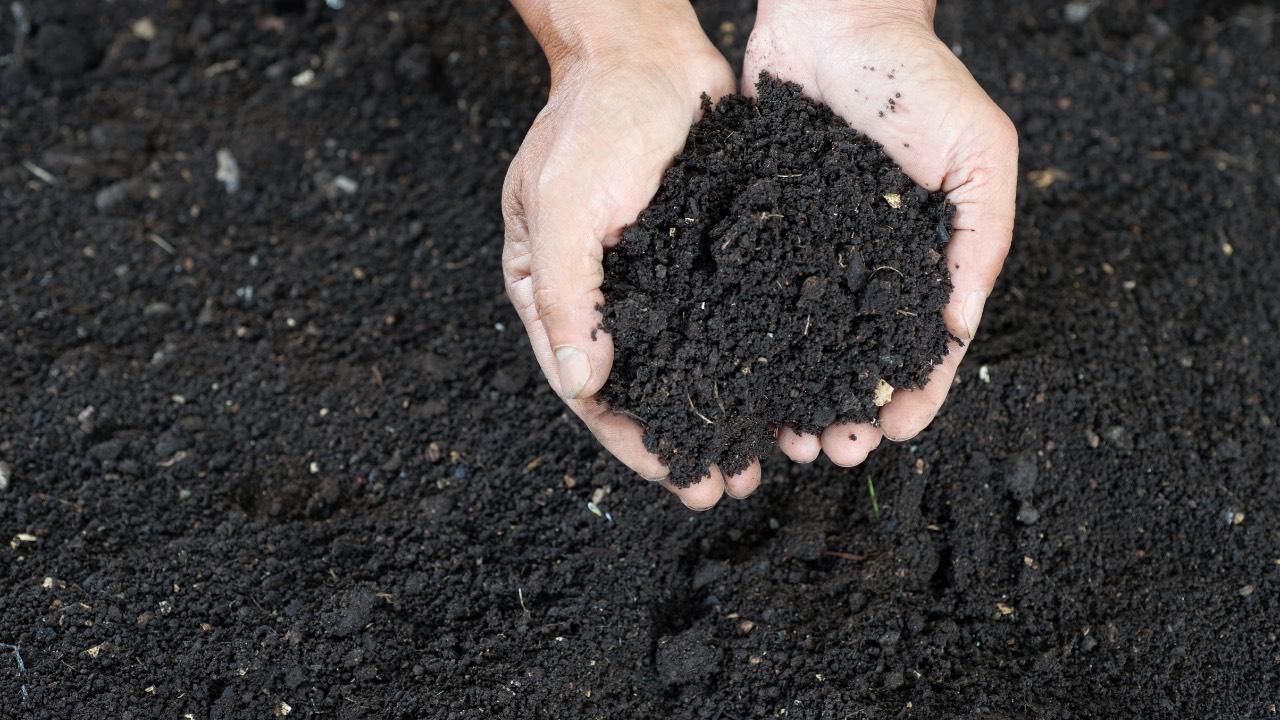
Composting vs. Cleansing: Why Parasite Obsession Keeps People Stuck
🎧 Listen to the Full Episode: You can hear the complete story and all the details on iTunes, Spotify, or YouTube
Recently I shared some things on Instagram about the dogma in the holistic health community and what the opposite of it is. The opposite of dogma is fluidity - staying open to new information and evolution. It's discernment - using wisdom rather than rigid rules. It's embodied knowing - trusting your body's intelligence over external authorities. It's adaptability - adjusting based on what's actually working. And it's curiosity - staying in questions rather than fixed answers.
And then I asked people what dogma - or things that they've been told they have to do to heal - are they confused by. And one of them was 'Do I have to do parasite cleanses?'
Which is a great topic, so I figured it was worthy of its whole entire own episode. Because let's be honest - parasites are being talked about everywhere these da...
The Hidden Connection: How Your Digestive Issues May Be Triggering Your Anxiety

The Hidden Connection: How Your Digestive Issues May Be Triggering Your Anxiety
Have you ever noticed that your anxiety seems to flare up alongside your digestive symptoms? This isn't a coincidence. What if I told you that the butterflies in your stomach, the knot in your throat, and the racing thoughts in your mind might all share a common origin?
The Gut-Brain Axis: Your Second Brain at Work
Scientists have discovered what many ancient healing traditions have known for centuries: your gut and brain are engaged in constant, intimate conversation. This communication highway, known as the gut-brain axis, is reshaping how we understand both digestive issues and mental health concerns.
Your digestive system houses what scientists call your "second brain" – an intricate network of over 500 million neurons called the enteric nervous system. This neural network produces many of the same neurotransmitters found in your brain, including a staggering 90% of your body's serotonin – the "happ...
